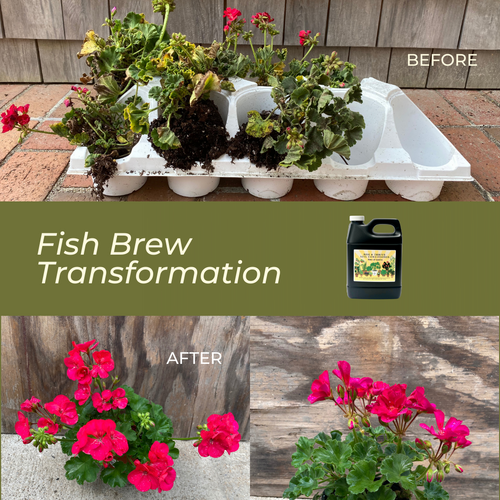
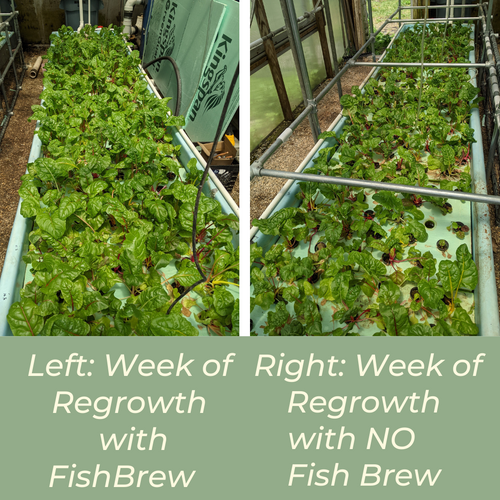
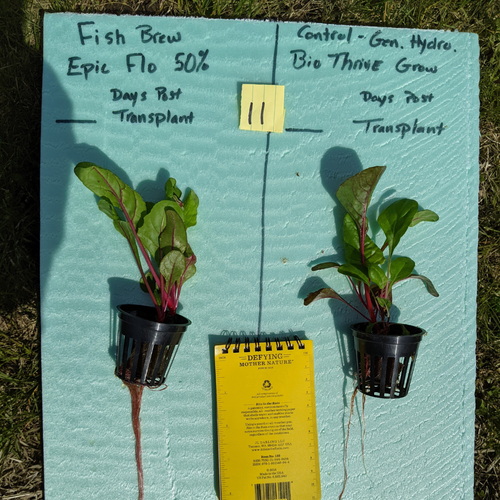
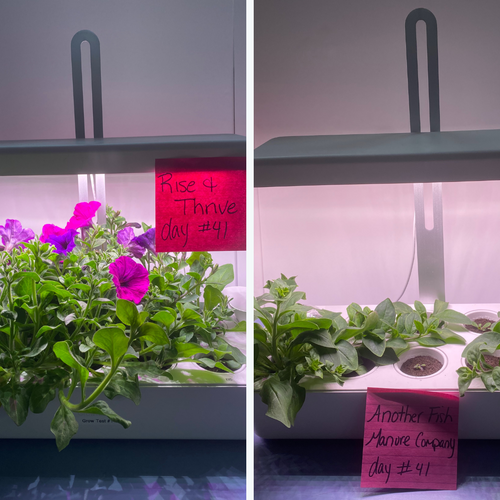
I have been using the fertilizer and conditioner and to be honest I use both on everything. Plants, compost pile, worm bin & under my rabbit cages. I’ve gotten great results.
Ronnie P.
“I used Fish Brew Bold on my dying tomato, basil and mint plants. It gave my plants the boost of nutrients they needed and my plants came right back to life."
Jackie F.
I am a cut flower farmer growing cut flowers for florists and designers. I’m trying to grow the most beautiful and perfect flowers and I think Fish Brew is a great help! My ranunculus were looking a bit yellow and after applying Fish Brew I was impressed with how quickly they greened up!
Liz C.
"I have been using aquaculture waste for 14 years and have tried all the products on the market to restore dirt back to soil. These sweet products are way more potent, viable and diverse in the biological communities and organisms. If you want a biological bump for any plants, these are the only products I recommend."
Leighton Morrison
"It is absolutely amazing how much my houseplants have grown after using Fish Brew Bold for just a few shorts weeks. They are healthier and their colors are more vibrant!"
Jennifer S.
I love your products, makes a lot of sense, and my plants thank you very much.
Paul A.
I'm just a hobbyist messing around with a homemade pittmoss mix in my apartment, but the fish brew makes it easy to feel like a pro"
We often talk about the soil food web as a static factor that is either there and healthy or damaged and absent but it is a lot more complex than that.It is an everchanging ecosystem that shifts as it interacts with the greater ecosystem and environmental changes.When working with farms and orchards, it is often important to have ways to measure the soil food web and assess the efficacy of efforts to influence it.
Well seriously, can you? An assumption we hear often is that food grown naturally tastes better.But others may say food is food. Tom-ay-to/Tom-ah-to. But what does the science say on this topic? Is living soil grown food better?
Nitrogen represents one of agriculture’s most critical yet paradoxical challenges.The atmosphere contains abundant nitrogen gas that plants cannot access directly, yet feeding the world requires transforming this inert atmospheric resource into useable forms. In this post, we want to dive into how nitrogen gets to the plants, how agriculture can maintain productivity while progressively improving sustainability and resilience, and how Fish Brew can play a role in meeting those goals.